About
Scientific Software Days (SSD) is a successful regional conference that has been held for eight years running at the University of Texas, Austin. This year we are seeking to expand the impact of the conference to a national scale. The target audience are users and developers of scientific software, and the goals of the conference are two fold:
- Share best practices among scientific software communities.
- Share the latest tools and technology relevant to scientific software.
Past keynotes speakers include Greg Wilson (2008), Victoria Stodden (2009), Steve Easterbrook (2010), Fernando Perez (2011), Aleksandra Pawlik and Will Schroeder (2012), Neil Chue Hong (2013), Jeff Hammond and Robert van de Geijn (2016), Beatrice Riviere and Mark Hoemmen (2017).
Click here to see pictures from previous conferences
Speakers
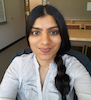
Ritu Arora Texas Advanced Computing Center
“Developing Reusable Software that is Interoperable with Existing Software Infrastructure”
[slides (.pdf)]
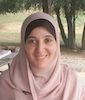
Doaa Altarawy Virginia Tech
“MolSSI Framework: Towards usable and reproducible simulations in Computational Molecular Science”
[slides (.pdf)]
Lindley Graham Amazon Web Services
“Lessons Learned: Creating and Maintaining Pipelines for Continuous Analysis”

Schedule
| Thur., Apr. 26 | |
| 8:00–9:00 | Registration/Breakfast |
| 9:00–10:00 | Keynote: Daniel S. Katz |
| 10:00–10:30 | Coffee |
| 10:30–11:05 | Ritu Arora |
| 11:15–11:50 | Tobin Isaac |
| 12:00–1:30 | Lunch (provided) |
| 1:30–2:05 | Doaa Altarawy |
| 2:15–2:50 | Lindley Graham |
| 3:00–5:00 | Poster Session and SIAM Student Chapter Social |
| Fri., Apr. 27 | |
| 8:30–9:00 | Breakfast |
| 9:00–10:00 | Keynote: Alicia Klinvex |
| 10:00–10:30 | Coffee |
| 10:30–11:05 | Sergey Fomel |
| 11:15–11:50 | Robert McLay |
| 12:00–1:30 | Lunch (not provided) |
Registration
Conference registration is done through Eventbrite. Click the 'Register' button and you can then select what type of registration (student vs. non-student) to purchase.
- If you register as a student, please remember to bring valid student ID with you to the event.
- Refunds will be allowed up until two weeks before the event.
- To present proof of your registration purchase at the conference, please either print out your ticket or use the Eventbrite mobile app to present your ticket.
Location & Travel
Travel Support
The conference has a limited amount of funding to support students traveling to the conference. Priority will be given to members of underrepresented groups (underrepresented genders, underrepresented races, and persons with disabilities).
To apply for travel support, please fill out this Google Form.
Location
Talks will be held in the Avaya Auditorium in the Peter O'Donnell Jr. Building on the corner of East 24th Street & Speedway on the campus of the University of Texas at Austin.
View Larger Map
Lodging
There is no reserved conference hotel block, but here are some options that are reasonably convenient:
Transportation
Public transportation: Capital Metro has frequent routes to and from the UT campus; UT-specific route information can be found here. Route 7 is the nearest route for the Embassy Suites hotel; routes 1, 3, 5, 7, and 8 all go from campus to stops downtown, as well as the 801 rapid. Capital Metro also has buses to and from the airport.
Visitor parking information for UT Austin can be found here.
Steering Committee
-
Sergey Fomel University of Texas at Austin
-
Robert Kirby Baylor University
-
Matt Knepley Rice University
-
Suzanne Pierce Texas Advanced Computing Center
-
Brian Adams Sandia National Laboratories
Organizing Committee
-
Damon McDougall University of Texas as Austin
Jennifer Proft University of Texas at Austin
-
Arturo Vargas Lawrence Livermore National Lab
Contact
Sponsors


Community Sponsors
